
What You Can Learn From A $70 Zombie Movie That Was The Buzz Of The Cannes Film Festival
Topics: case studies|entrepreneur|ideas
14 Sep 2009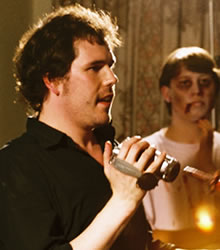 Aspiring filmmaker Marc Price wanted to make a zombie movie, but had no budget to work with. However, he didn’t let that stop him.
For about $70, he managed to shoot, edit and release COLIN, a full-length movie about a zombie invasion, told from the point of view of an infected zombie. COLIN created a buzz when it was screened at the Cannes Film Festival a few months ago and managed to secure a distribution deal for limited release in UK theaters. The film is also being considered for distribution in the US and Asia.
Aside from being an inspiration for other amateur filmmakers, Marc has a lot to teach everyone about executing big ideas on a small budget. He was gracious enough to answer a few questions for us.
1. How was the idea for COLIN born? Did you write the script then figure out a way to shoot it, or did you write the script based on what you could do on a small budget?
We definitely approached the story knowing what we would have available to us. Particularly actors. I knew that someone like Alastair Kirton could carry the movie on his shoulders and we’d be able to find great supporting cast members to keep each scene interesting and full of character. We also knew what locations would look suitably desolate at particular times of the day and we planned to use that to our advantage.
Lesson: Learn to work with what you have available.
2. How did you go about learning what you needed to know to make COLIN a reality (both on the movie-making side and the special effects side)? What kind of relevant skills did you have going into this project, and how much did you have to learn on the fly?
I’d been shooting and editing the film for a few months when someone gave me a copy of Robert Rodriguez’s “Rebel Without A Crew.” Whether its getting to know your camera, how you’re going to edit your shots or how you’re going to design the sound, Rodriguez insists that it’s important to know your way around the film-making process.
Only when I read that did I realize that the experience gathered working on our shorts helped us get to know what we could and could not do. Most importantly, it gave us a good idea of what can work effectively on an audience. We’d find ourselves looking at what effect we’d want a scene or moment to have on the viewer, then look at what we had available to us and find the best way to achieve that effect.
In terms of make-up we didn’t know a thing at the start of production. We didn’t know what materials we’d need or how to apply them. Luckily we had Michelle Webb who would not only handle some of our more complex make-up jobs, but she would actually show us how to apply make-up to actors and leave equipment with us for the days she wasn’t available.
Lesson: It’s important to study as many different aspects of a business as possible. But when you don’t know something, find someone who does.
3. With a budget this small, you had to convince a lot of people to work for free, both in front of and behind the camera? How did you get so many people to donate their time?
I guess most of the favors came from the actors and make-up people. I asked the make-up guys to bring their own materials and gave them the freedom to create any zombie they wanted providing we could have the specific ones we asked for. We ended up with some incredible zombies and the make-up team were very generous in showing us how to do it ourselves. I was very lucky to know a lot of actors who could bring incredible layers of depth to relatively small parts.
As for the crew I found myself taking on the majority of production roles (like many low budget film makers, I guess). But I have no practical skill at building props or weapons so my flatmate spent a lot of his time finding objects on the way home from work and adapting them into interesting effects rigs or exciting props.
I think the key is to treat everyone with a lot of respect. Ultimately when you get a bunch of people working for free on anything it always starts with them caring a great deal for the project. We just tried to even the playing field a bit so that everyone was aware of how important their role was in the film. We said “please” and “thank you” a lot and although we weren’t really feeding anyone, general courtesies such as tea and coffee were always available and people were kept busy with as little waiting around as possible.
Lesson: Look within your personal network to find people to help you out, then get them personally invested in your success. Respect their time and their effort.
4. The movie takes a new approach to the zombie genre, telling the story from the perspective of a zombie. How much do you think the novelty of this unique approach has contributed to the success of COLIN?
It’s difficult to say. The audience response to the film so far has been very positive, which is obviously far more important to us than anything else. Hopefully if an audience embraced the movie, the low budget element will work to inspire other filmmakers to make their own movies using whatever equipment they have available.
It certainly felt like we had a lot of material to explore and what I really wanted was a solid emotional core that could get under the skin. To create a character we could genuinely care for and have a vested interest in his journey.
Lesson: A gimmick or novelty can help generate initial interest, but it needs to be backed up by substance.
5. How has the fact that the movie was done on a such a small budget contributed to interest in the movie? Do you think that is one of that factors that makes the movie so unique? Would it have been as successful on a larger budget?
The “£45 ($70) zombie movie” thing is certainly a good platform to start discussing what we wanted to do with the movie in terms of story, character and especially how we managed to get it made. So I certainly don’t resent it. But I do worry that the label can get old pretty fast.
If the film would have cost a few thousand pounds or even a few hundred I doubt it would have had as much attention. I think circumstance played a large factor in that it was a relatively quiet Cannes Festival, the global economic crisis was at the forefront of everyone’s mind and our film happened to be a story that someone thought would be interesting. It kind of took off in its own small way.
Lesson: What seems like a negative, such as a bad economy, can provide unexpected opportunities. And fewer people doing things lessens your competition.
6. Making a movie on a such a small budget is a huge undertaking. What made you think you could actually pull this off? Did you go in with sort of a “let’s see if we can do this” attitude or was it more of “I know we can do this.”
I didn’t really think about it (I hope that doesn’t sound irritatingly naive). Aside from the larger action sequences the bulk of the movie was essentially me, the camcorder, Alastair Kirton as Colin and any actor along for that day or morning. When you think about it like that, knowing what locations we had available to us and how we were planning on editing everything together with the sound design. It was more a case of “this is what we’re going to do! Now let’s go an do it till it gets done!” I didn’t really ask if it was feasible, but the idea of taking our script to someone who would decide whether it was worthy enough to make into a movie didn’t really appeal to me.
Lesson: Overthinking can be destructive. Focus on the task at-hand, work to get it done, then move on to the next task.
7. What’s next for the movie COLIN? What’s next for you personally?
The plan with COLIN was always to show what we could responsibly create in order to get the next film made. But I despise the sort of film-making that would use a genre film just “to break into the industry.” Our efforts first and foremost was to try and make a film that an audience would respond to emotionally and it would be the quality of how we achieved that which would hopefully allow us to acquire a fairly modest budget. The plan for the next film is to hang onto our low-budget ethics long in order to retain control over our projects and grow as a team.
Lesson: A small-budget approach provides creative freedom and can open doors to bigger things.
Not Just For Making Zombie Movies
Hearing how Marc went about making COLIN has a lot to teach us about making things happen. Hopefully his story will inspire you to work with what you have to bring your ideas to life.
Thanks to Marc for taking the time to share his experience with us. For more information about both Marc Price and his movie COLIN, be sure to visit www.colinmovie.com

- Tags: Cannes Film Festival, COLIN, Marc Price
10 Reasons Why Freelancing is the Best Job Security
Topics: entrepreneur
9 Sep 2009We spoken before about the false perception that working for someone else is the conservative choice and is considered “safe.” But just in case there was any doubt, the economic collapse last year proved that the safest choice is to be in control of your own career. When you hand over your financial security to someone else, you leave yourself at risk.
Over at Freelance Switch, there is a great article worth reading regarding job security and freelancing. The third reason is why I decided to share this here:
3. You Have a Better Ability to Control Your Income
If you’re doing great work, growing profits, and winning business for a company, you may or may not get the recognition you deserve. (Here’s a secret: companies only hire employees so they can use them to make a profit.)
When you freelance, you have the ability to give yourself a raise at any time. Simply raise your rates! When you land that big contract, you will profit from it.
That’s much better than having all your efforts going to earn your boss another quarterly bonus, right?
Pop over to Freelance Switch and check out the rest of the reasons.
- Tags: freelancers
Are You Managing Your Business Like a Poorly-Run Emergency Room?
Topics: entrepreneur|running a business
8 Sep 2009You may have noticed that over the last two weeks, I have managed to write only one blog post. While I often like to share the things I do right on this blog, this time I’m going to discuss something I’ve done wrong over the past few weeks, so that we can all learn from my mistake.
I’m happy to report that my consulting business continues to grow, and I have been taking on new clients and expanding my relationships with existing clients. The downside of this has been the avalanche of work that has followed. And I am ashamed to admit I have let it get the best of me.
Instead of carefully planning and scheduling tasks to best utilize my time, I have been falling back to a pure triage system, attending to things as they come in based solely on severity. While it hasn’t impacted any of my clients, other areas, such as this blog, billing and administrative tasks, etc, have all been affected.
So, here are 3 questions I have been asking myself lately. I share them so we can all better manage our workload.
1. Is This Really an Emergency?
When a patient comes into an Emergency Room, they believe they have the most pressing problem. But in reality, someone’s sprained ankle will have to wait while a patient having a heart attack is tended to. In an emergency care situation, harassing a nurse or complaining won’t get you very far. The same should apply to your clients and customers.
It is important to rationally evaluate each issue as it comes in and decide which is the most pressing. Is one client losing money each minute their site is down? Is another client about to pitch an investor with a product that isn’t working correctly? Sometimes a client is the loudest because their problem is the biggest, but often times, this isn’t the case. It’s crucial to recognize the difference and act accordingly.
2. Are You Planning Ahead?
In any business, there will always be emergencies that come out of nowhere. But the key to handling them is to make sure that the rest of your workload is properly scheduled and managed so that chaos won’t ensue when things change. Planning ahead is key to this. When I have some downtime, I should be writing blog posts to save for the weeks when I’m crushed under work. It seems obvious that we should be taking care of future tasks when things are slow, but it is surprising how few people do this.
3. Do You Have a Process for Handling Emergencies?
When clients come to you with last-minute issues, they can be panicked and anxious about how it will be handled. Having a set process for how you handle emergencies and following a structured plan can put them at ease. For instance, you may create a separate email address that routes to your phone for your clients or customers to use when there are true emergencies. This way they will know that you are prepared and accessible. On your end, you won’t need to worry about monitoring your main email address at all times, knowing any actual emergency will come in via the alternate email address.
Also, establishing a timeline with your client right away will set expectations and prevent them from feeling they constantly need to follow-up or harass you. Letting them know when things will be done, whether it’s minutes, hours, or days, will put them at ease and make everyone’s life easier.
Prescription: Triage Only Works When Combined with Planning
Having a proper triage approach to your business will ensure that emergencies are properly dealt with. But if planning ahead isn’t also part of your process, your business will fall apart under the strain of an increased workload.
Make sure you are prepared in advance and you’ll be able to handle any emergency that comes your way, while still finishing the rest of your work (like writing this blog post).
Book Review: Escape From Cubicle Nation by Pamela Slim
Topics: book reviews|entrepreneur
26 Aug 2009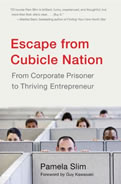 Career coach and blogger Pamela Slim recently released her first book, Escape From Cubicle Nation. Based on her blog by the same name, the book outlines the process of moving from employee to entrepreneur. Though I have already made the leap to self-employment, I enjoy reading Pamela’s blog and was interested to see what she had to share with others. Now deep in the trenches of running my own consulting business, I figured I would share my thoughts on the book for those just starting out.
For years I have referred to leaving a job you don’t like as “busting out of Shawshank.” Since this book discusses how to “escape” corporate life, I’m going to continue on with a jailbreak metaphor for this review, if only to amuse myself.
Life Behind Bars
The book starts by discussing the failings of corporate America and the unhappiness that has been borne among many who live inside those corporate walls. The basis for this introduction goes back a few years, to an excellent and inspiring blog post/rant the author wrote titled an Open letter to CXOs across the corporate world. Having been a corporate trainer and consultant, Pamela had seen how companies repeatedly disappointed and failed their employees, causing her to declare a new mission to help people break out and forge ahead on their own.
The book does a good job outlining what drives people to consider starting their own business, and addresses the fears and concerns that arise when contemplating a major life change. Such upheaval can be emotionally daunting and the first few chapters acknowledge that, helping to put readers in the right frame of mind for the next step.
Planning Your Escape
There are many paths to self-employment, and various options are presented to readers. A nice chunk of the book is dedicated to identifying an opportunity, thinking of a business concept, and testing your idea in the real-world. This is admittedly an extremely deep subject, and at times the author breezes over a topic, or offers advice that is a bit too generalized (if you need to be advised to Google “graphic design” to consider starting a graphic design business, you should probably reconsider). Case studies of individuals with non-traditional careers are also included, to help paint a picture of how one can support themselves without a regular paycheck.
Life on the Outside
The book wraps up by discussing the various practical elements involved in starting and running your own business. Somewhat mundane but crucially important topics like legal representation, insurance policies, and tax preparation are included, though (thankfully) not in great detail. More in a “don’t forget to go research this more” kind of way. Here the book finds a good balance on including important topics without devoting too much time to each one.
Conclusion
Escape from Cubicle Nation offers a fun and informative look at a serious and sometimes scary subject. The author’s writing style, and the metaphors used (like referring to certain business decisions as Crack Pipes vs Wheatgrass Juice), keep things entertaining and easy to read. The book is comprehensive, offering an overview of everything involved throughout the entire process of starting your own business. If you are looking for details of the specifics, like marketing your business when you’re just starting out, then this probably isn’t the right book for you (though, to the author’s credit, she does also introduce readers to other experts and authors who could fill in those gaps.)
Overall, I would recommend Escape From Cubicle Nation as a great starting point for anyone considering making this leap. When the economy tanked, it showed that there is no such thing as a steady paycheck, and that we as individuals are responsible for our own financial security. The warden (your boss) may be taking care of you now, but ultimately, he probably doesn’t have your best interest at heart. Breaking out and being your own boss may be your best bet at job security.
If escaping your cubicle seems appealing, then pick up this book. Read it, then start digging. Freedom is waiting on the other side.
CBS to Run Magazine Ad on TV this Fall (and other lame ideas)
Topics: advertising|marketing
20 Aug 2009
NEW YORK–Broadcast network CBS will be advertising its fall TV season with a print ad from an issue of Entertainment Weekly airing during an episode of Two and a Half Men.
The September 18 episode of the long-running sitcom will feature the first print ad to appear on TV, George Schweitzer, CBS marketing president, said Wednesday at a press conference at the company’s headquarters here.
The ad will be launched in partnership with PepsiCo to promote Pepsi Max soda and the TV network’s Monday prime-time lineup. Not everyone will be seeing it: the print ad will only appear to viewers in the New York and Los Angeles areas–an episode without the magazine ad will be shown to viewers elsewhere.
Of course, the above isn’t true. But sadly, it’s not too far from reality.
It’s been all over the news and blogs today that CBS will be running a small video ad inside of a magazine this fall, kind of like a musical birthday card (sidenote – how long until we see video birthday cards?). The announcement was accompanied by comments about “leadership in innovation” and the “evolution of marketing.”
Consider me unimpressed.
Gimmicks like this may provide short-term interest, but with the wrong audience. You’re going to attract people interested in checking out some snazzy technology instead of building an interest in your programming lineup among potential viewers. Unless their target demographic is advertising executives, they should think of something else. When I see big media companies taking this kind of approach, it just makes them seem out of touch.
The rules of marketing have changed. Using mass-media gimmicks like this won’t work. If you want to be innovative, truly innovate. Don’t just move around the deck chairs.

About Mark Webster
One of the Co-Founders of SideTour, former TechStar (NYC Summer 2011), ex-NBA'er, and past TechCrunch Disrupt Hackathon Winner.
- Tweets that mention How to Negotiate Like a Jamaican Taxi Driver | Websterism - Big Ideas. Small Budgets. -- Topsy.com: [...] This post was mentioned on Twitter by Mark C. Webster, Mark C. Webster. Mark C. Webster said: [...]
- Tweets that mention The Night Before Christmas REMIX (An ode to the bloggers who helped me change my life in 2009) | Websterism - Big Ideas. Small Budgets. -- Topsy.com: [...] This post was mentioned on Twitter by Jonathan Fields, Mark C. Webster. Mark C. Webster said: [...]
- Tweets that mention The Greatest Benefit of Working for Yourself | Websterism - Big Ideas. Small Budgets. -- Topsy.com: [...] This post was mentioned on Twitter by JenniferKeene, Mark C. Webster and Mark C. Webster, Smal [...]
- Tweets that mention The Power of Being First | Websterism - Big Ideas. Small Budgets. -- Topsy.com: [...] This post was mentioned on Twitter by Jason Markow, Mark C. Webster. Mark C. Webster said: The [...]
- Tweets that mention Dan Smith Will Teach You Marketing: An interview with a local New York legend | Websterism - Big Ideas. Small Budgets. -- Topsy.com: [...] This post was mentioned on Twitter by jascog. jascog said: For Manhattanites http://bit.ly/sM6 [...]
- Defining what personal failure looks like
- Want to clone my startup? Let me save you $5,757.
- What to Expect From a Disrupt Hackathon
- Getting Off on the Wrong Foot
- Why Groupon Could Be the Next Walmart (and why that’s bad for local businesses)
- Jason Calacanis Just Made His Company Mahalo One Big Hackathon
- Why You Should Stop Learning (and Start Doing)
- Should You Offer Rewards for Referrals?
- The Difference Between Tools and Talent (or what we can expect from Google App Inventor)
- Freelancing Advice: A Unique Approach to Billing Clients
Topics
- advertising (3)
- book reviews (2)
- branding (8)
- career (5)
- case studies (1)
- design (8)
- entrepreneur (44)
- general (1)
- ideas (27)
- lifestyle design (1)
- marketing (23)
- networking (5)
- running a business (9)
- viral (3)