
The Problem with Pitchmen (and other shows about inventors)
Topics: entrepreneur|marketing
24 May 2009Infomercial superstars Billy Mays and Anthony Sullivan have been keeping us all entertained with their new series on Discovery Channel, Pitchmen. Each week, the duo introduce several different inventors trying to get the guys to hawk their wares. They then select one or two and feature them throughout the episode, inviting us along on the taping of the commercial then showing the initial results from the airing of the spot.
The backstories of each inventor is almost always the same. They have invested their life savings in their product, took a second mortgage on their house, and consider this a make or break moment, leading to only huge success or total financial ruin.
When American Inventor was aired for two seasons, they would feature many of the same types of inventors. Invested everything in “their dream” and now cross their fingers, hoping it will all work. Let’s face it, dramatic stories like these tug on the heartstrings and make for great television.
But they also illustrate a dangerous path for entrepreneurs to follow. Success rarely requires every last penny to be put on the line in the beginning. Looking for ways to test out your idea, to dip a toe in the water before jumping in, is a much better approach. In an earlier post, we discussed using a tradeshow to get feedback on your idea. Depending on the product, a craft show or farmer’s market could also provide some needed validation. And Tim Ferris’ outlines several different ways to test an idea, including a great online method, in his best-selling book The 4-Hour Workweek.
Even on a small budget, it’s possible to take your idea, put it in front of your target audience, and see if they are willing to break out their wallets, all before you have to empty yours.

Seth Godin has a great perspective on working with freelance talent. Read the post, it’s worth a look.
Basically, what he is saying is you have a choice: Do you want to hire a head, or are you looking to hire hands?
If you know what you want, but you don’t know how to write code, or use Photoshop, that is a very different situation than hiring someone for their expertise. If you are hiring someone for their creativity, you have to be willing to listen to their point of view. Giving someone no direction when you really already have something in mind is just going to create frustration and lead to a lot of back and forth on both sides.
And, selfishly, if you know what you want, but just can’t bring it to life, you can usually get a better rate on the project. Paying for someone’s thought process and creativity is an unneeded expense if that’s not what you’re really looking for.
So make sure, going in, you know what you want. It’s the best way to guarantee you’ll get what you need.
- Tags: freelancers
Using Tradeshows as Focus Groups
11 May 2009When we first considered launching the WingDipper as an actual business, we spent a lot of time debating whether or not it was a good idea and a potentially viable business. We were also unsure about pricing, and distribution options. Having no real experience in the foodservice industry, we weren’t even sure if this product was something restaurants would want. We had a lot of learn, as we were basically starting from scratch. And we were unsure where to start.
We ended up deciding to exhibit at a tradeshow, to gauge reactions to the product, find the right price point, make industry contacts, and learn more about the food business as a whole. And being the kind of guys who like to take big leaps, we decided that the National Restaurant Association Foodshow in Chicago, the industry’s largest show, would be where we introduced the WingDipper to the restaurant world.
Looking back, it stills seems a bit crazy. We went to the show with a prototype of the cup, had no pricing to speak of, and had absolutely no product to sell. But we got the idea in front of potential customers, saw their reactions, discussed their business, and found out what they were paying for plastic cups now and what they would consider paying for the WingDipper. It was a relatively small investment up front to determine if the business was worth pursuing. And the information we learned was priceless.
If you have an idea, tradeshows can be a great way to gather opinions and feedback from the same people you’d be selling to down the road. Of course, it doesn’t always make sense to judge an idea on the reactions from just one show. But it can be a powerful tool in your arsenal to make sure you’re on the right track.
- Tags: marketing
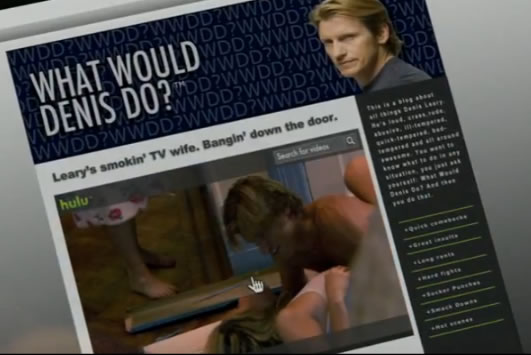 Since their first commercial launched during this year’s Superbowl, Hulu has been releasing a series of ads promoting the site. They all feature a celebrity from a hit show airing on either an NBC or FOX owned channel. The concept centers on the idea that Hulu is designed to turn your brain to mush, and that the stars are, in fact, aliens with plans for world domination. (Um…ok.) It’s kind of an odd idea. Regardless of your opinion of the concept, however, it is executed brilliantly.
The latest ad features Denis Leary, who stars in Rescue Me on Fox’s FX channel. One thing jumped out at me during the ad. They discuss the fact that you can embed Hulu videos on other websites and share them online. When they mention blogs, they show one of the laptops visiting a site called “What Would Denis Do.” Any fan of online gossip sites would recognize this as a parody of popular blog What Would Tyler Durden Do?, or WWTDD.
Most viewers probably wouldn’t catch on to this inside joke. But for those who get it, it shows that Hulu gets it, making it appear the site is run by people who spend too much time online, just like them. It also guarantees a mention not only on WWTDD, but also other blogs. It’s a great way to make this commercial go viral.
Audiences often respond to a marketer who seems like they are one of them. And it pays to think about how your marketing can be tweaked to include little details that would help it spread virally. Take a look at the full ad below, and think about what you could do to help your message spread.
- Tags: commercials, marketing, viral
Was putting together some thoughts regarding packaging design, which I’ll post about in the near future. But came across this interesting story over at brandchannel that I wanted to share:
The traditional red and white Campbell’s soup can with its gold medallion, dating from the turn of the 19th century, inspired confidence in generations of American consumers. It was redesigned in 1994 to show a mouthwatering picture of the contents because the company found that although people were keeping cans in their cupboards at home, they were not actually eating the soup. The colors and medallion remain, although less prominently than before the design change.
As marketing channels become more and more cluttered, the important of packaging design is going to continually increase. The package will have an increasing responsibility to visually illustrate the product and brand attributes. The importance of logos will decrease, as more consumer decisions are made at the point of purchase. Something to think about.
Source: brandchannel.com

About Mark Webster
One of the Co-Founders of SideTour, former TechStar (NYC Summer 2011), ex-NBA'er, and past TechCrunch Disrupt Hackathon Winner.
- Tweets that mention How to Negotiate Like a Jamaican Taxi Driver | Websterism - Big Ideas. Small Budgets. -- Topsy.com: [...] This post was mentioned on Twitter by Mark C. Webster, Mark C. Webster. Mark C. Webster said: [...]
- Tweets that mention The Night Before Christmas REMIX (An ode to the bloggers who helped me change my life in 2009) | Websterism - Big Ideas. Small Budgets. -- Topsy.com: [...] This post was mentioned on Twitter by Jonathan Fields, Mark C. Webster. Mark C. Webster said: [...]
- Tweets that mention The Greatest Benefit of Working for Yourself | Websterism - Big Ideas. Small Budgets. -- Topsy.com: [...] This post was mentioned on Twitter by JenniferKeene, Mark C. Webster and Mark C. Webster, Smal [...]
- Tweets that mention The Power of Being First | Websterism - Big Ideas. Small Budgets. -- Topsy.com: [...] This post was mentioned on Twitter by Jason Markow, Mark C. Webster. Mark C. Webster said: The [...]
- Tweets that mention Dan Smith Will Teach You Marketing: An interview with a local New York legend | Websterism - Big Ideas. Small Budgets. -- Topsy.com: [...] This post was mentioned on Twitter by jascog. jascog said: For Manhattanites http://bit.ly/sM6 [...]
- Defining what personal failure looks like
- Want to clone my startup? Let me save you $5,757.
- What to Expect From a Disrupt Hackathon
- Getting Off on the Wrong Foot
- Why Groupon Could Be the Next Walmart (and why that’s bad for local businesses)
- Jason Calacanis Just Made His Company Mahalo One Big Hackathon
- Why You Should Stop Learning (and Start Doing)
- Should You Offer Rewards for Referrals?
- The Difference Between Tools and Talent (or what we can expect from Google App Inventor)
- Freelancing Advice: A Unique Approach to Billing Clients
Topics
- advertising (3)
- book reviews (2)
- branding (8)
- career (5)
- case studies (1)
- design (8)
- entrepreneur (44)
- general (1)
- ideas (27)
- lifestyle design (1)
- marketing (23)
- networking (5)
- running a business (9)
- viral (3)