
A great way to get your message out there and promote yourself, Twitter has undoubtedly become a big part of online marketing mix. Along with websites and blogs, having a Twitter profile is now a crucial step towards maintaining a successful web presence.
Bloggers especially have been attracted to the service, having arguably helped contribute to the company’s current success. The site is a great way to share bite-sized chunks of wisdom with others, helping to drive readers to your full-sized blog for insights longer than 140 characters.
An important piece of building awareness and driving traffic through Twitter is the information contained in your profile sidebar. This is where you can tell others who you are and why you are worth listening to. And there is a place to link back to your website. That link is the reason for this post.
The line containing your website URL currently has what seems to be a character limit of 25 characters. Unfortunately, that includes the label Web along with a full URL starting with http://www, which leaves a measly 6 characters for your website name after the ellipse is added.
As an example, let’s look at the profile of blogger and Four Hour Workweek author Tim Ferriss:
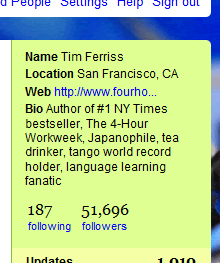
This profile tells people a little bit about Tim and what they can expect from him. It also links to the website promoting his book. However, the way Twitter displays the link, all we are shown is fourho, which (while mildly amusing) doesn’t really explain much. As many bloggers use Twitter to promote themselves and their blog, it would be nice to display more of or all of the domain name and drop the unneccessary extra characters. Even if the entire domain name still wouldn’t fit, 25 characters would be a lot more useful than the current six.
Here is how Tim’s profile could look with this minor change:
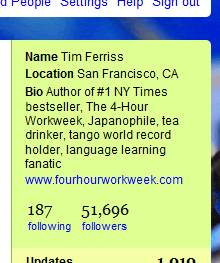
That’s a huge improvement. This way, readers can actually see the name of the website, letting bloggers better promote their site to potential readers. And from a usability perspective, this is still just as effective. The label and http portion don’t communicate any functionality that isn’t shown in the second example.
I see little reason for Twitter not to make a change like this. For a service based on making every letter and character count, it is surprising to see such poor efficiency. And it would make every Twitter user who has a related website happier, especially bloggers and marketers.
So, Twitter, are you listening?

- Tags: The 4-Hour Workweek, twitter
5 Things to Consider When Naming Your Business or Website
Topics: branding|entrepreneur|ideas
14 Jul 2009Naming your business or website is usually the first marketing decision you will have to make when starting a new venture. A name is important, as it is responsible for the first impression people will have of you. Whether or not your name helps explain what you do, or evokes emotion, or even if people remember it, all depends on making the right choice.
In today’s environment, you can’t have a conversation about business naming without considering domain names and their availability. There is always the option of adding an LLC or INC to a name in order to obtain the domain, but they tend to be less memorable and confusing to customers. So we’ll take those options off the table, and consider naming practices that involve finding a corresponding domain.
There are various things to consider when starting out, but to help you along, here are a few core concerns to take into account when choosing a name and domain for your business. Follow these guidelines, and you will be on your way to creating a memorable and dynamic brand.
Here are 5 Things to Consider When Naming Your Business or Website:
1. Uniqueness
Picking a unique name or making up a new word (like Twitter) can be a double-edged sword. On the one hand, it creates an opportunity to own that word, and any related terms (like tweet). In a online world run by search engines, creating your own word helps to ensure that people will be able to find you, and you will own the “Google-juice” that goes along with that term.
On the other hand, inventing a word or phrase can be an uphill battle in building awareness. Upon first hearing such a name, customers won’t understand what product or service is being offered. You will have to explain not only what your business does, but also what the name means. Since many times they have no rational meaning, unique names are often laced with emotion and can taint how a customer perceives your business. Twitter faces a challenge being taken seriously as a communications medium because their name and brand is unserious and whimsical.
The common practice of combining two words together won’t have some of the same benefits as a truly unique name, but can help explain to customers what they can expect. Names like TaxPro.com (for an accountant) or ClosetMaid.com (for closet organizers) immediately convey something about the product or service. It will also earn your site a higher ranking in search results for terms like “tax professionals” or “closets.”
Domainsbot.com is a great site for finding a domain name. You can enter a specific term and it will show lists of available names using that word. Play around with it if you’re looking for a name.
2. Easy to pronounce
Having a name that is easy to pronounce is important for two reasons. First, it makes it easier for people to spread the word and tell others about your business. But it also helps them to spell it correctly, whether they are searching for it or typing it into their web browser.
The cookware and kitchen supplies company Sur La Table takes a risk with their name, with some consumers being unsure how to pronounce it and having a name that sounds as if it could be spelled multiple ways (sur, ser, sir). Having a name that is straightforward and easy to pronounce can take away a lot of the guesswork consumers might have.
3. Easy to spell
A good name may be easy to pronounce, but it should also be easy to spell. A lot of great names can include words that are commonly misspelled and can make poor domain names. Sun Surveillance sounds like a good name for a line of solar-powered security cameras, but the word surveillance isn’t an easy word to spell, and makes for an easy-to-mistype domain name.
Using numbers in place of words can also be a losing strategy when choosing domain names, as can using dashes. 24-7 Yellow Cab spells out what they offer, but good luck getting anyone to remember the website is 24-7yellowcab.com.
4. Open to Future Growth
When you are first starting out, it can be hard to look into the future and predict the way your business may change and grow. Having a very specific name can limit you down the road, as can tying it to a specific technology or naming trend. A lot of businesses and domains that use “e” in their name seem dated now that people have stop using e-business, e-consulting and other related terms to the extent they used to.
A name like MySpaceTemplates.com may provide great SEO results initially, but as MySpace continues to falter, the site will be limited by their name (it’s also never a good idea to include someone else’s trademark in your name). A name like ProfileTemplates.com would provide a longer shelf-life (though that also limits the site to templates for social networking profiles). There will always be some level of tradeoff between finding a useful name and leaving it open to future growth, but it’s important to be aware of the possibilities your name will provide down the road.
5. Can it be Misinterpreted?
This is perhaps the most hilarious of considerations to be aware of when choosing a name. It’s funny to look at businesses that have made mistakes like this, but it’s hard not to feel sorry for those who have names that can be interperted in…less than appropriate ways.
Kids Exchange seems like a respectable name for a childrens’ clothing consignment shop, but you would be hard-pressed to find a domain worse for such a business than kidsexchange.net. In the same vein, Therapist Finder assists Californians with finding a therapist or counselor, but I’m not sure therapistfinder.com offers a service many people are looking for. Take a few extra moments to write out each name to try and catch these types of errors. Even better, show it written down to a few other people before you move forward. It can save you from embarrassment later on.
Finding an effective and catchy name for your business is the first step in creating a lasting brand. Remember, there is no such thing as a perfect name. There are pros and cons to every option. Just take these suggestions into consideration when making your selection and you will be on your way to building a successful business.
Happy Make A Difference Day (and Happy Birthday Seth Godin)
Topics: entrepreneur|ideas
10 Jul 2009A few days ago Seth Godin wrote a post about birthdays, and how we should celebrate them.
With all due respect to Hallmark, the idea of sending people cards and presents on their birthday seems both selfish and small-minded. It seems to me that we could think bigger.
He decided to share his own birthday wish with us.
On my birthday, it would make me really happy if people started a project, launched an idea or engaged in a difficult interaction that made something good happen. Make a difference day.
Well, today, July 10, is Seth’s birthday. Happy Make a Difference Day!
If you would like to wish him a happy birthday, head on over to Squidoo to sign his virtual card.
So, how are you going to make a difference?
- Tags: Seth Godin
 I had just posted an article regarding karma and then United Airlines delivers a perfect example of what NOT to do.
Musician Dave Carroll flew United about a year ago. Somewhere along his trip his $3500 guitar was broken. He immediately complained to three flight attendants, who all couldn’t be bothered. Over the next year, he complained to and dealt with several different company representatives up and down the corporate food chain. Nine months later, he finally received an email from a Ms. Irlweg stating that United will not offer any type of compensation or replacement. They didn’t deny damaging the guitar, but rather based their decision on the fact that he didn’t speak to the right people at the right time. But the story doesn’t end there.
Mr. Carroll decided, as a musician, he had one last resort. And he even informed United of his intentions beforehand. In his own words:
In my final reply to Ms. Irlweg I told her that I would be writing three songs about United Airlines and my experience in the whole matter. I would then make videos for these songs and offer them for free download online, inviting viewers to vote on their favourite United song.
My goal: to get one million hits in one year.
And, of course, United ignored him. So he wrote and posted his first song, United Breaks Guitars. The video has gone viral and has been viewed, commented on, and shared all around the web. He says a second is almost done, and a third is on it’s way.
Wouldn’t you know it, now United has now announced that they “contacted him directly” to “make things right.” They could have saved themselves the effort and the bad press from just taking care of Mr. Carroll’s problem at the start of this mess. And it would definitely be cheaper than whatever they are going to agree upon now.
With the airline industry as competitive as it is, no carrier needs this type of negative publicity. The Internet gives every customer a great big megaphone to attack you when they are mistreated. So do right by others, and they’ll do right by you.
United Breaks Guitars (backstory)
United Breaks Guitars (video)
Karma Marketing: How Helping Others Can Lead to Success
Topics: entrepreneur|marketing|networking
7 Jul 2009Aside from any religious meaning, it seems most of us believe in a sense of karma. The concept that good things happen to good people, and that bad people get what they deserve is compelling. It seems fair and just.
I will leave the workings of the universe aside for a moment, and focus this discussion solely on the world of business and marketing. Whether you are dealing with professional colleagues or your customers directly, the decisions you make and the manner in which you conduct yourself can have a powerful impact on your success.
Spreading the love in your industry
A common piece of networking and job search advice is to connect with others and help them out when times are good, so that they are more willing to help should you need something down the road. Even if that day never comes, these good deeds will give you a reputation for helping others and for being a “good guy” (or gal). People appreciate when others look out for them and will go out of their way to find an opportunity to return the favor. It will also keep you on the top of their minds as new opportunities arise.
It’s important that you treat everyone with respect and do what you can to dole out favors and help out when you can. It is not always obvious who is in a position to reciprocate. Roles are always shifting and changing. That intern in your office may switch jobs and become your customer. The boss you have been working to align yourself with may decide to drop it all and spend his days sailing around the world. Treating everyone with a basic sense of respect will ensure you are always taken care of.
Caring about customers
Of course, this isn’t a new idea. In the classic film Miracle on 34th Street, we see Macy’s employee Kris Kringle send customers to the competition, Gimbel’s, when Macy’s doesn’t have a specific item in stock. Ultimately, this makes customers more loyal to Macy’s (and we all know how it ended for Gimbel’s.) This may be just a movie, but it makes an important point. When customers believe you care more about making them happy than just collecting their money, they will value your relationship with them. You will always be the first one they turn to when they need something.
You will also be banking that karma for a rainy day. Eventually, you will slip up. An order will vanish, or a product will fail to meet a customer’s expectations. A sense of goodwill towards you will cushion the blow and will likely provide an opportunity for you to make things right without harming the relationship and losing the customer.
It’s not easy to do this. It requires a lot of time and effort. But planting seeds of goodwill is an effective way to grow your business and your career. It is probably one of the most cost-effective marketing strategies you can employ.
So go out there and spread the love. You’ll be surprised how quickly it will come right back.
- Tags: karma

About Mark Webster
One of the Co-Founders of SideTour, former TechStar (NYC Summer 2011), ex-NBA'er, and past TechCrunch Disrupt Hackathon Winner.
- Tweets that mention How to Negotiate Like a Jamaican Taxi Driver | Websterism - Big Ideas. Small Budgets. -- Topsy.com: [...] This post was mentioned on Twitter by Mark C. Webster, Mark C. Webster. Mark C. Webster said: [...]
- Tweets that mention The Night Before Christmas REMIX (An ode to the bloggers who helped me change my life in 2009) | Websterism - Big Ideas. Small Budgets. -- Topsy.com: [...] This post was mentioned on Twitter by Jonathan Fields, Mark C. Webster. Mark C. Webster said: [...]
- Tweets that mention The Greatest Benefit of Working for Yourself | Websterism - Big Ideas. Small Budgets. -- Topsy.com: [...] This post was mentioned on Twitter by JenniferKeene, Mark C. Webster and Mark C. Webster, Smal [...]
- Tweets that mention The Power of Being First | Websterism - Big Ideas. Small Budgets. -- Topsy.com: [...] This post was mentioned on Twitter by Jason Markow, Mark C. Webster. Mark C. Webster said: The [...]
- Tweets that mention Dan Smith Will Teach You Marketing: An interview with a local New York legend | Websterism - Big Ideas. Small Budgets. -- Topsy.com: [...] This post was mentioned on Twitter by jascog. jascog said: For Manhattanites http://bit.ly/sM6 [...]
- Defining what personal failure looks like
- Want to clone my startup? Let me save you $5,757.
- What to Expect From a Disrupt Hackathon
- Getting Off on the Wrong Foot
- Why Groupon Could Be the Next Walmart (and why that’s bad for local businesses)
- Jason Calacanis Just Made His Company Mahalo One Big Hackathon
- Why You Should Stop Learning (and Start Doing)
- Should You Offer Rewards for Referrals?
- The Difference Between Tools and Talent (or what we can expect from Google App Inventor)
- Freelancing Advice: A Unique Approach to Billing Clients
Topics
- advertising (3)
- book reviews (2)
- branding (8)
- career (5)
- case studies (1)
- design (8)
- entrepreneur (44)
- general (1)
- ideas (27)
- lifestyle design (1)
- marketing (23)
- networking (5)
- running a business (9)
- viral (3)